
Finished: June 25, 2023
Why I read this
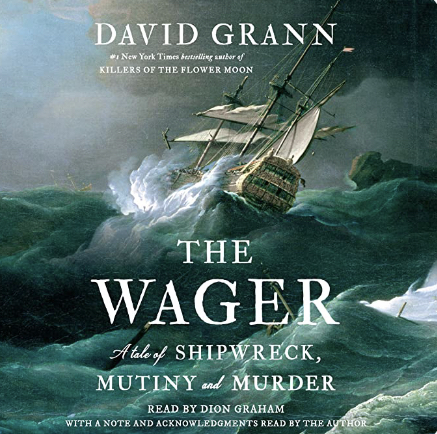
Honestly, the genre of historical nonfiction usually doesn’t appeal to me, however I have recently destroyed my internet cookies with this reading habit and have been getting dozens of articles on what’s hot and new, and for some reason this book is appearing on all of them. Moreover, I was looking for something quick and easy to go through as an audio book since I had been doing mostly the Ender’s game series, but I actually had the third book in physical so I figured while I read that why not have a nice unrelated book to listen to. Hence, The Wager.
What I learned
As I said, normally this is not my genre, so since I was in high school or early college I have read next to nothing about our history. Exposure in museums or through facts or articles on line has been the most I’ve had for a long while. So when I started listening to this book it was super interesting to see all the things that were different just a few hundred years ago. Things that I take for granted, such as needed to eat citrus on long ship voyages to avoid scurvy, just weren’t discovered yet. Furthermore, I never really understood the repercussions of discoveries like this. Having scurvy was like really bad. I couldn’t imagine being on a ship for weeks to months and all of a sudden you go crazy and your bones start to fall apart.
Also, with stories such as these I am always amazed by the ability of the human body to survive. You hear stories regularly of someone having a minor accident or getting sick with a random flu and they die, then on the other hand you have people like these who were able to survive the harshest conditions possible, non-stop for months to years. Hypothermia, dehydration, malnutrition, disease, exposure, food poisoning, you name it, and still a few of these people were able to survive.
Finally, I was amazed at the amount of people that die at sea in this time period. I always thought of the life of a sailor to be a bit adventurous and exciting, but the fact that a mission of nearly 2000 people could come back with only about 700 remaining and although it is acknowledged as a failure you would think the risk of sailing would be permanently banned by the country. Imagine anything in the modern day having a fatality rate of 60-70%. That activity would be instantly banned by every governing body on the planet. People of this period were made of different stuff….
What I didn’t like
Honestly with this book I struggled here and there to stay focused. It was a busy few weeks while I was listening to this one so I regularly had other things on my mind, but I did have to ask myself if the book was all that interesting. I also found that after the third or fourth time that the author discussed the depravity of the castaways and their difficulties with finding food and handling starvation somewhat desensitized the reader (or listener) to the horrors that this condition entailed. I’m no writer, but maybe there were other ways to increase the impact of the suffering.
Questions I asked
Why are some humans so resilient and some so frail, even from people with generally the same characteristics or even genetics?
How after so many encounters of kindness and helpfulness could people of this period still be so xenophobic?
Is it possible to control a group of people in the face of horrible physical constraints such as starvation or cold?
My Favorite Quote
“A reprieve rarely lasts. It is inevitably shattered by some unforeseen event”
John Bulkley
Books I liked like this one
Humankind: Rutger Bregman (For historical accounts of the good in humans)
Heart of Darkness: Joseph Conrad (For its trails of the human body)

 Book Reviews for Mom