
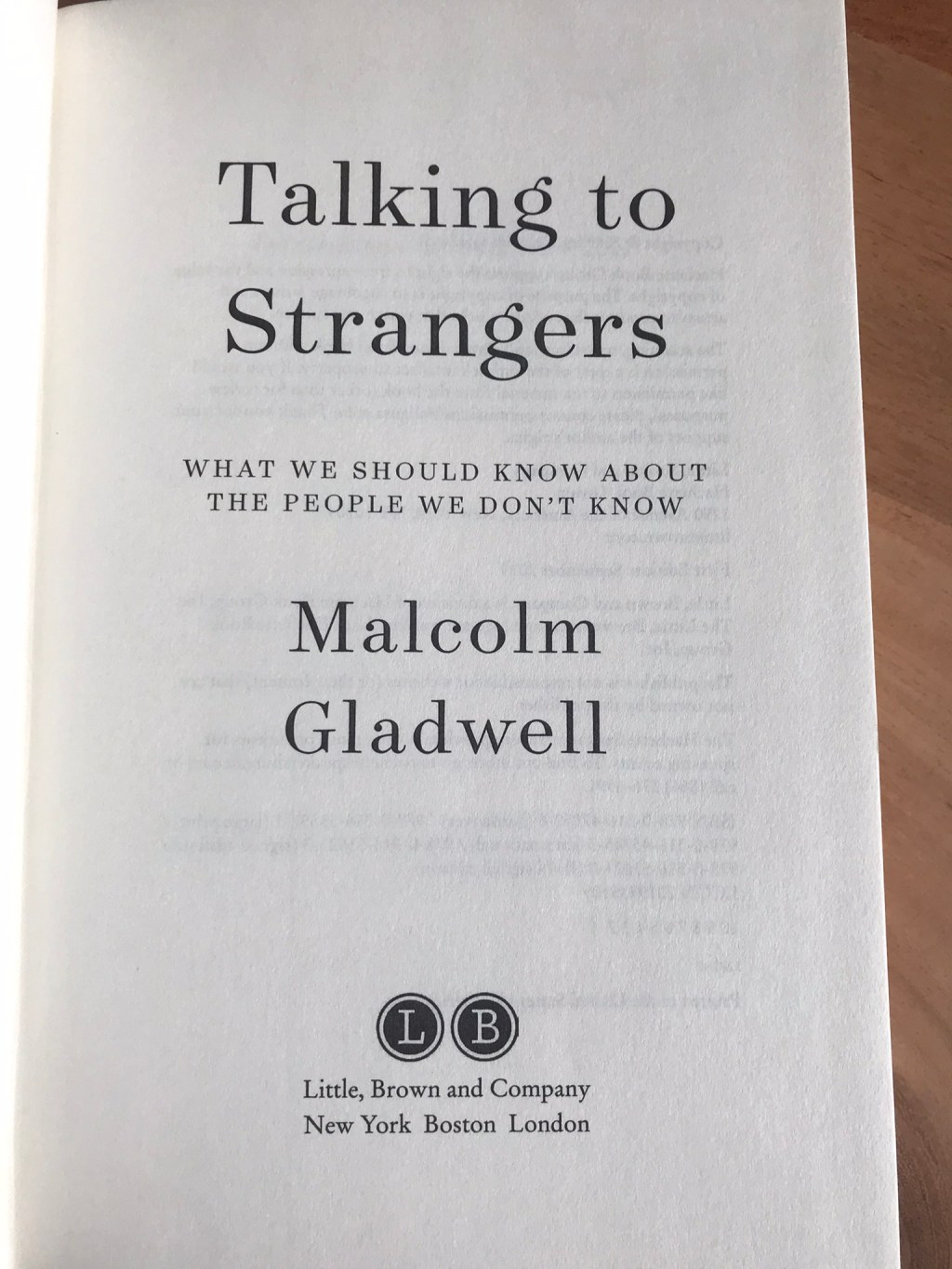
Finished: July 18, 2023
Why I read this
This was another of the books that I had not heard about that came included in the birthday care package. Coming in the large set with not cover art or description I had no idea what the book was about. However, the title caught my eye. Much of my job is about networking effectively and talking with people I may not know very well so I thought it might be relevant. So after something very nebulous like Tinkers I thought lets do some personal development!
What I learned
I will admit at the start of the read I was a bit dissapointed. I was looking for something in this book that was light and whimsical, that would help me have meaningful conversations with a stranger. What I did not expect was a critique of the American justice system and deep psychology of serious subjects such as rape, murder, racism, etc. However, despite the initial shock I was instantly enthralled in the content. I love psychology books written around a story. The various things you learn and can apply and link to things around you is always super interesting and exciting.
For example, hearing about the story of the CIA agents with Cuba reminds me of many things from Thinking Fast and Slow and specifically the section about how experts are normally worse than an algorithm at many things we expect experts to be exclusively qualified to know. Expert intuition simply is not as reliable as most people believe, and we never know what we don’t know. This was further echoed in Checklist Manifesto where a simple checklist, even when applied to expert professionals, increases key performance indicators across the board. So if CIA agents can’t tell when someone is lying, its normal, because really that expert intuition is not that valuable for that indicator, despite how backwards that sounds.
What I didn’t like
I really enjoyed this book. It was excellent and I agreed with many of the points from the conclusions. I also really enjoyed the open way of discussing very difficult topics. It is hard to have a conversation about the Stanford Swimmer or racially charged murders without seeming insensitive or seeming to blame the victim. Regardless, I had just one complaint. The very commonly referenced shock experiments from Stanley Milgram did not fit so well here. In another book, Humankind, Rutger Bregman discusses this experiment and finds that many of the key results are flawed by rather shoddy experiment set-up. That being said, it is for some reason continually quoted. Someone as smart as Malcolm Gladwell should be aware of this and I felt a bit that he was using the experiment to improve his point without acknowledging the flaws of the experiment. I felt it lowered his credibility overall by a small margin.
Questions I asked
How can we have serious and challenging discussions about very controversial topics without raising offense?
If someone does something horribly wrong as the result of a system that is poorly established, can you place blame on the individual?
If you have two strangers who both do not understand the other, in the event of a serious mis-understanding, how do you determine who should bend to the ignorance of the other?
My Favorite Quote
“We have a default to truth: our operating assumption is that people we are dealing with are honest?”
Paul Harding
Books I liked like this one
Thinking Fast and Slow: Daniel Kahneman (For its real life applications of psychological principles)
Humankind: Rutger Bregman (For the story like nature of serious psychology)

 Book Reviews for Mom