
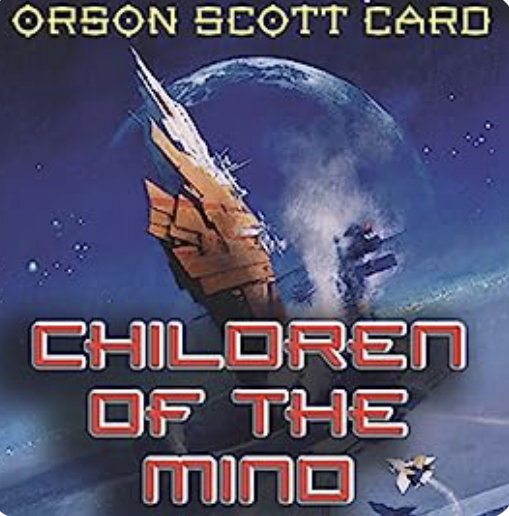
Finished: July 21, 2023
Why I read this
Obviously having read/listened to the previous three books I had to finish up the Ender series from Orson Scott Card. Where our characters were left off in the previous book left me a bit dissatisfied and I was glad this book was already written.
What I learned
This next installment into the Enderverse definitely continued on the trend of changing almost all of the conflicts from physical conflicts to moral ones. It felt to me that each chapter was 30 minutes to an hour with a different two characters arguing about a topic where no one was right and no one ever could be. Despite this, I enjoyed some of the overall themes of the book. For example, in my personal life I have had challenges about the morality of judgement. Should we judge others? When is it ok/when is it not? On what scale do we judge a human? These questions will never have answers but Card did a good job in the book of discussing that we are judging beings, and we look at the actions of each other and determine the moral value of each other.
What I didn’t like
In the first three books I felt like Card always made his characters believable and I could usually take their side and understand them. I think he lost a bit of that ability in this volume. I found it very challenging to take any of the characters side in arguments and found almost every unreasonable and emotional. Ultimately I just did not think people would act the way that they did and found it pretty incredible.
For example, normally humans come together in times of conflict. If there is a single enemy, an overwhelming problem, or some catastrophy, humans tend to leave their pride and anger at the door and work together. However, here, Card made all of the characters continue to waste hours and days of precious time arguing and even devolving into personal and harmful attacks. Characters like Quara were just absolutely intolerable with no explanation at all as to why they might act the way that they do. Regardless of the situation, the context, or the topic Quara was miserable, and there was no explanation like trauma, or isolation, or mental illness, or any reason that she should act this way. It made it hard to engage with the topics because the characters were so unrealistic and unreasonable.
Questions I asked
In an encounter with an entity that is impossible to understand, is any action incorrect? Or are actions only capable to be judged in hindsight?
Are we independent thinking beings or are we a collection of memories? If you put your collected memories perfectly into another human would they become you?
Can we truly do something for the benefits of others? Is altruism of any kind achievable?
My Favorite Quote
“Nobody is rational, we all act because we are sure of what we want and we believe that our actions will get us what we want, but we never know anything for sure…”
Miro
Books I liked like this one
How to Win Friends and Influence People: Dale Carnegie (For principles about convincing people to do things)
The Dark Tower Series: Stephen King (For the moral and global questions produced that are challenging or impossible to answer at the end of a fantasy or science fiction series)

 Book Reviews for Mom