
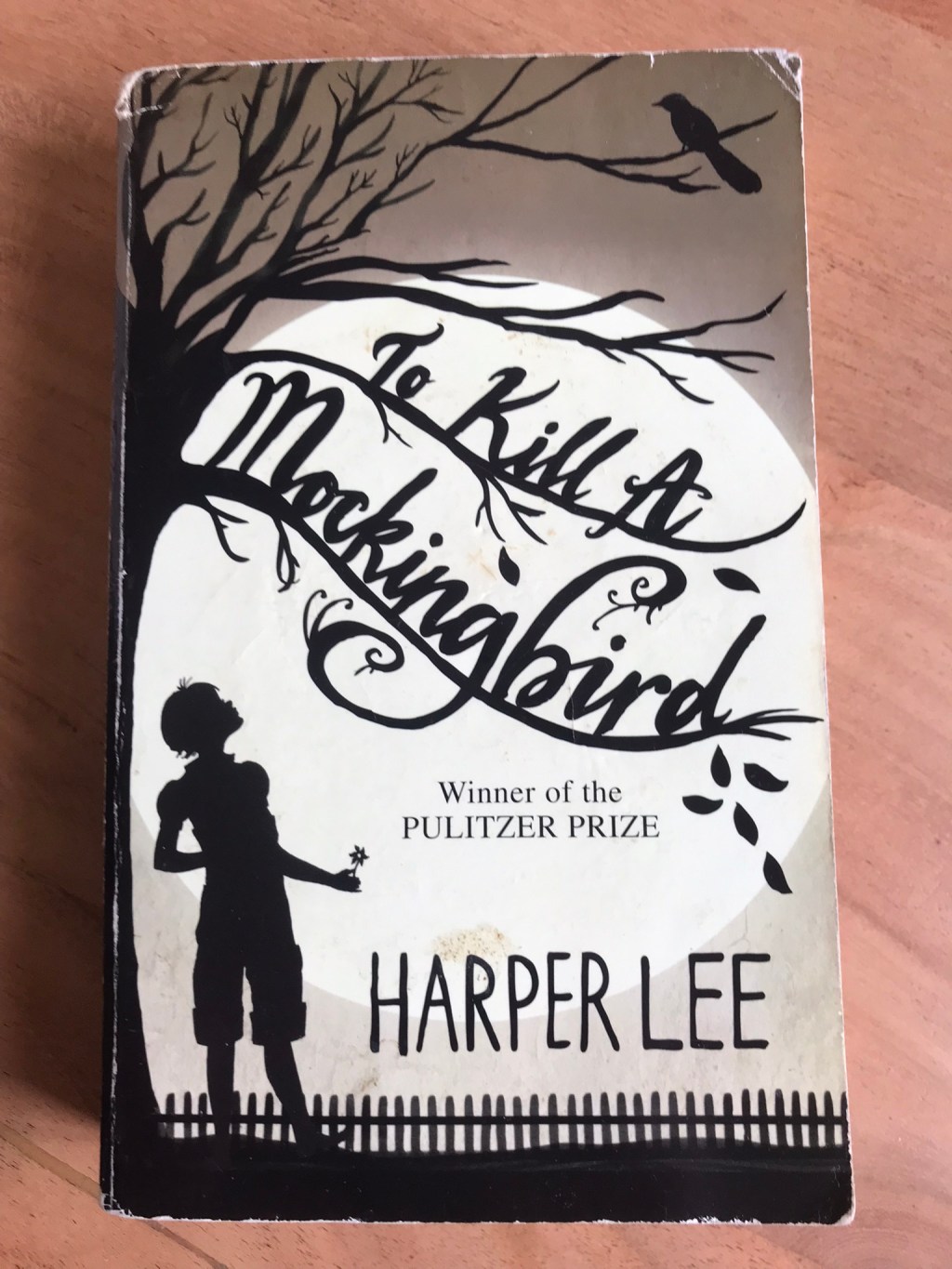
Finished: November 8, 2023
Why I read this
I remember reading this book when I was in grade school, despite the controversy of the rather strong language throughout, and really enjoying it. But if you asked me a month ago what the plot was I don’t think I could have told you more than that the dads name was Atticus and he was a lawyer. It’s incredible how quickly we forget these things, in 10 years will I be looking to read it again? If that’s the case I think I’ll be rather happy because in agreement with the reviews and awards I was absolutely taken on this read through and finished it in just over 3 days. Note that unlike most of my reviews, this one has a few spoilers in it, so if you’d like to avoid knowing some key points of the book I encourage you to go and read it then come back and see if you agree with me. Or not!
What I learned
While I read this book I flipped back and forth frequently between two major themes. On the one side it’s hard to see the horrible way people have been and still are, especially in the American South that will always be my home. On the other side we have the powerful and forever relevant life lessons about how we should treat one another. I think the way Lee was able to combine these two themes makes the novel so moving and heartfelt.
Starting with the darker side it’s hard to imagine how deep racism was rooted in this society. The events of the book are taking place 60+ years after the civil war, but still the tensions between black and white are enormous (see my comments on Europe after the Second World War, in the recap of All the Light we Cannot See). This tension shows a couple of themes I’ve been exploring a lot recently as well with “us vs. them”, and default to truth (a concept from Talking with Strangers by Malcolm Gladwell). It is obvious how “us vs. them” relates to the story, but what I found very interesting was the thoughts about which “them” is more important to people. Here the jury in the trial didn’t have to choose between just race, but also morality. Do they choose someone who is repulsive to them because of their character, or someone who is repulsive to them because of their race? We are all part of many in groups and not part of many more. How will those around us choose to rank which “them” is ok and which is not.
To go even further with “us vs. them” we have to consider the consequences of going against the pack for the people here. Atticus was a respected and liked member of the community before taking the case, and once he took it people began to turn on him. Since he was already someone who was strong willed and independent he was able to bear it, but for many it isn’t possible. To go against your group means social suicide in these situations. So even if you think something is wrong, you are unlikely to do so because you will lose your entire support system. In a time like this if you sided with a black person in a controversial trial it could even be physically dangerous to you. So of course the jury chooses like they did.
The other idea of “default to truth” is a little less obvious. This idea is that people will normally trust one another and assume someone is telling the truth if they do not have any reason to believe that they are not. This of course plays a role in the trial where it would be very hard to convince a jury when there is only circumstantial evidence that someone who looks like they do is lying. But this isn’t the only part of the story where this comes in. For example at the end it was impossible for the children to believe someone was chasing them in the woods because the default is that someone is not, and it took exceptional evidence of someone being there before they tried to run away.
Moving back to the lighter side of things, I was incredibly impressed by the character of Atticus and the life lessons he imparted upon his children. I have often seen many of the ideas that he expressed, such as looking at things from the other person’s perspective before judging, not taking anything personally, demand all the facts before taking a side, all seemed to heavily echo lessons I’ve seen in self-improvement books. The very first chapter of How to Win Friends and Influence People (written even before this book, who knows maybe Harper Lee read it!) discusses how if you want someone to like you always talk about things from their side and their perspective. Maybe the motivation for why you do this are different, but in both cases you need more empathy to achieve it.
Then on the other side you have Aunt Alexandra, who although annoying, has many of her own important lessons about how you should behave (even when it is hard), what it means to be part of a community, and don’t go around telling people you know more than them. Even though her traditionalism feels outdated she still feels human. She acts just as you would expect a woman who is desperately trying to preserve the past elegance of their family. This way the characters are exceptionally human makes the lessons they share that much the stronger.
But both of these characters, and that of Dolphus Raymond (who pretends to be a drunkard so that people won’t bother him about having an interracial relationship), bring me to my final point that is something I have a lot of trouble with. When there are competing personalities, cultures, ideas, etc. who is responsible for changing their mind for the others? Atticus takes the side of accepting the intolerance of others while doing what is right in his head, Alexandra says that everyone else should take her ideals and be like her, and Dolphus chooses to hide his real ideals so that he won’t offend anyone else. Is it simply a matter of degree? That you should be moderate in your approaches, but have a stance nonetheless. Or is it more that you should pick your values and your battles? Like in The Subtle Art of Not Giving a F*ck that you only have a certain number of fucks to give and you can’t fight about everything? Scout has these same competing influences, and it shows that being a good person is much more complicated that it seems. If you stand up for yourself and others, but you damage the functioning of the community what is more important? Or if you always take the side of everyone else are you forced to become tolerant of intolerance?
What I didn’t like
It’s not necessarily a complaint of the book here, but I feel that there is often a lot of difference between books when it comes to the level of intelligence and insightfulness of children. I feel like almost every book has dramatically different levels for what kids will understand or accept. A 10 year old can be dumb as a rock in one, or a super genius in another. Even in the same book you often have an enormous difference, or for the same characters. For example Scout being able to read at the level of an adult but can’t understand that the man who saved them was Boo Radley before they told her.
But I guess books wouldn’t be very interesting if the characters were just normal people, so that explains the large percentage of super humanely smart children. Regardless, I am interested to see how the future experience of having kids of my own will help me figure this one out.
Questions I asked
Will people generally always put their culture and their groups over out groups? How will this affect my life in France? Will I always be in the out-group?
When there are competing personalities, cultures, ideas, etc. who is responsible for changing their mind for the others?
Is it wrong to pretend to be one way, if the only reason you do that is to not have other people bother you about it? For example are homosexuals who are in the closet wrong to be so? Or is the context that they are in wrong in that it prevents them from being themselves? But taken to the other extreme with say a person who enjoys murdering people (that our society considers universally wrong) are they wrong for not murdering people? Or are there certain contexts that we can universally define that make someone who violates them always wrong?
My Favorite Quote
“It’s not necessary to tell all you know. It’s not ladylike – in the second place, folks don’t like to have somebody around knowin’ more than they do. It aggravates ‘em. You’re not going to change any of them by talkin’ right, they’ve got to want to learn themselves, and when they don’t want to learn there’s nothing you can do but keep your mouth shut or talk their language.”
Aunt Alexandra
Books I liked like this one
Heart of Darkness: Joseph Conrad (for a historical fiction account of a terrible time of human history)
How to Win Friends and Influence People: Dale Carnegie (For lessons on how to get along better with people)

 Book Reviews for Mom