
Finished: November 22, 2023
Why I read this
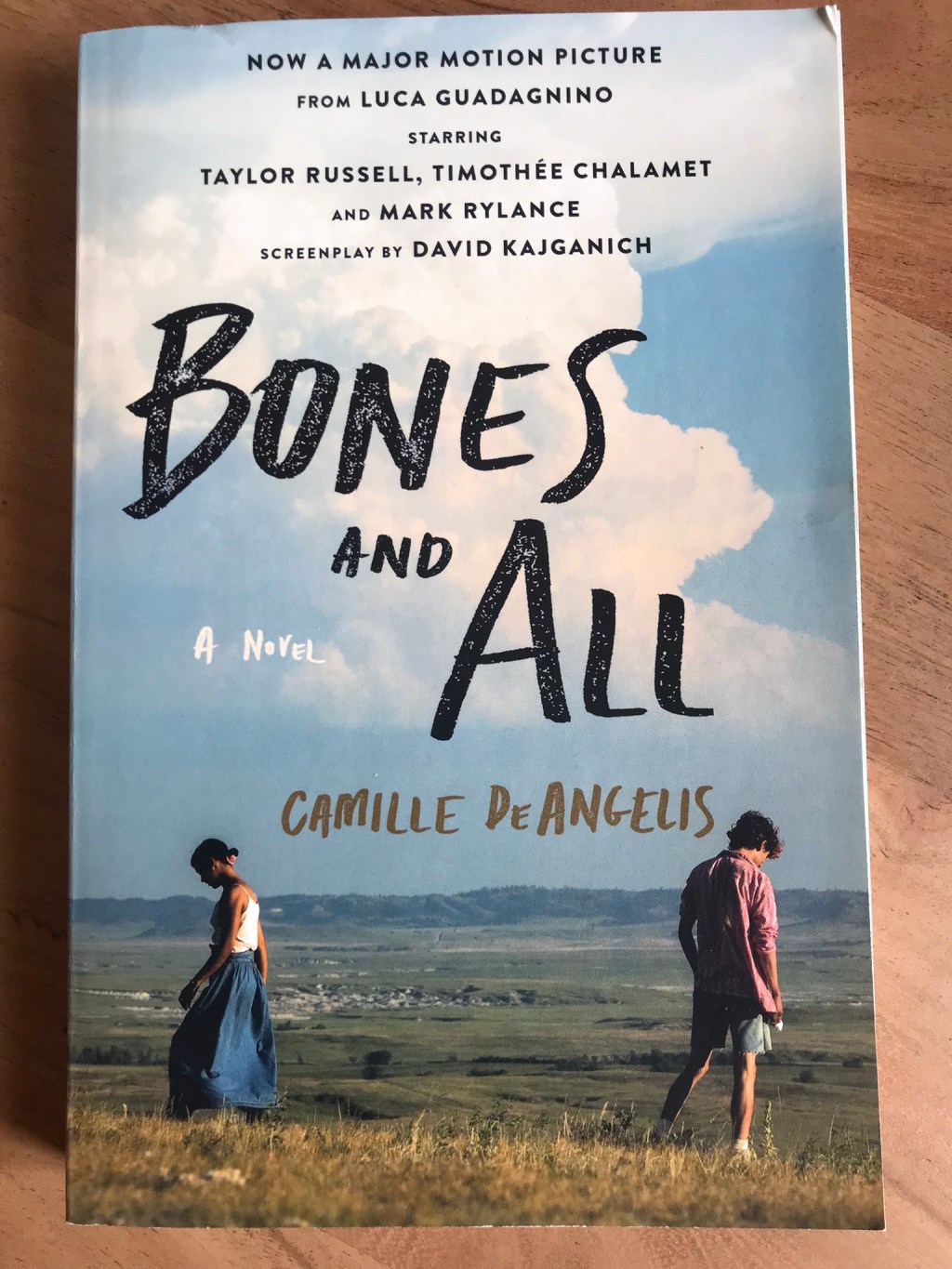
When I made my reading list for 2023 I wanted to be sure that I included a lot of different genres. I have already much too much of a tendency to read the same types of books and simply confirm my interests. So instead here I asked many of my family members to help me construct a reading list and I ended up with a very diverse cast of authors, much more than I normally would have. Bones and All ended up on the list as a recommendation from my sister, and although it was not my favorite read of the year, I’m not sure I’m able to define it as a complete waste of time.
What I learned
It has been clear to me from the start of my experiment here to interact a bit more deeply with the books I read that all books are not written equally. Every author has a different target audience and reason for writing, and every story is received differently from each reader making it quite an individual experience. So my first reaction after finishing this book to write immediately to my sister and exclaim my dislike of it was probably a bit too hasty. Despite what I found to be shortcomings there is definitely still some morals or discussions worth exploring.
The biggest of these ideas for me was that you shouldn’t hate yourself for who/how you are. That each one of us has parts of us that society might say are unacceptable, yet these « flaws » exist anyways. So, instead of hating ourselves for these traits, or living in an unending stream of shame and guilt, accepting to love who we are can be an important nod necessary step to growing as a person. If those around you cannot accept these things then no matter if they are friends, or family, it’s ok to leave them behind.
Pairing the lesson with what is probably the target audience (I guess teen, to young adult females), I can see why the author would put the story together the way they did. The challenges with younger people (myself definitely included) in trying to understand who we are today are real. We have the immediate influences that have always been there of immediate family, local and national politics, institutions such as schools or community organisations that have a common ethic. Wherever you might clash with that ethic can be very hard to reconcile. If people you love and or respect tell you that part of you is wrong or incompatible with being a good person it can be a constant source of stress and unhappiness.
But to make things worse we have a constant flow of information in the form of social media, to which we are all addicted, that exposes us to so much more of the world in good ways and bad ways. On the one hand we can find people like us and understand that many of these « shameful » opinions, attitudes, or actions can be even normal in other groups or communities. However, this is also a link to an almost unending stream or people giving their negative opinions of anyone and everyone that doesn’t fit their personal definition of a « perfect » person.
These problems aren’t anything new and they aren’t going away anytime soon, but the book here also begs the next and harder question. How do we handle situations where someone « accepting themselves », infringes on the rights of others, or is unhealthy for themselves? The second part of the question is even challenging because today who gets to decide what is a « healthy » behaviour, is up for debate.
I think most everyone in our society would agree that eating someone probably infringes on the rights of the other person so far that it should probably be considered unacceptable, and if the person who wants to be eating people feels bad about it, too bad for them. However some of the more recent controversial topics are much less clear. For example légalisation of hard drugs like heroin could allow some people to live how they would like to without threat of the law, so should we ban, shame, and stigmatise drug addiction as a universally bad thing? What about cases where people are addicted and infringe on the rights of others through things like vandalism or use of public health care facilities and funds? The epidemic of obesity in America (and quickly spreading to other countries, France is not excluded from this) included many people who are happy with a plus sized body and lifestyle, although obesity is generally contrary to most medical official health guidance. Stack this on top of the ethics of education (it’s only fair for someone to be happy with an obese lifestyle if they are well educated on the pros and cons of it, in my opinion), and the times in which (although fringe cases) where the size of a person can infringes upon the rights of others such as airplane seating, it is a stickier and stickier situation.
The point for me here is that you should love yourself, no matter who you are, how you look, or what you like to do (except in cases such as enjoying eating people, in that case do not love yourself, get help). But the lesson should always be balanced with an understanding of what these things will mean for you in the long term. If you like to dress up like a fox or get large facial tattoos with profanity it’s important to understand that loving yourself does not mean everyone else will love you, and certain things will result in certain outcomes. If you have FUCK tattooed on your forehead, don’t expect to get a job as a social worker for children.
What I didn’t like
Despite the strong lesson and one that is clearly deep enough to justify a story, I was easily able to find plenty to complain about throughout the book. However, mostly my complaints come from the way it was written, which is for its target audience of probably teenage girls. The story progressed in a way that was very challenging to relate to. I remember being a teenager, but I definitely didn’t remember almost forgetting the shame of having just eaten a perfectly innocent person because a boy smiled at me as the protagonist tended to do.
Moreover, many of the things were just not explained at all, for example how the main character was continuously found by the villain, why the « eaters » could just sense each other, or how the physics of the « eating » worked (there were never screams, the mess was never big enough, and the problem of the law of conservation of matter got at me quite a lot). There were just too many questions with the plot that needed to be explained at least with a weak explanation if not a thorough one. I am frankly surprised an editor didn’t point out some of these plot challenges.
Regardless, not my favorite book in the world, but for the right audience and right person I’m sure it would be a good beach read. At the end of the day it is probably less than 6 hours of easy reading so no big commitment anyways.
Questions I asked
When is it ok to be against societal norms and when is it not?
How many young people are lost with their identities these days? Is it more or less than previous generations?
Is being a bit lost in your identity a good thing for a few years? If you never question yourself can you justify yourself?
My Favorite Quote
“Whenever you tell yourself, This time will be different, it’s as good as a promise that it’ll turn out the same as it always has.”
Maren Yearly
Books I liked like this one
Dr. Sleep: Stephen King (for a similar cannibalistic idea)
The Witcher (Series): Andrzej Sapkowski (For frequent questions of if we should accept those who are different into our society)

 Book Reviews for Mom