
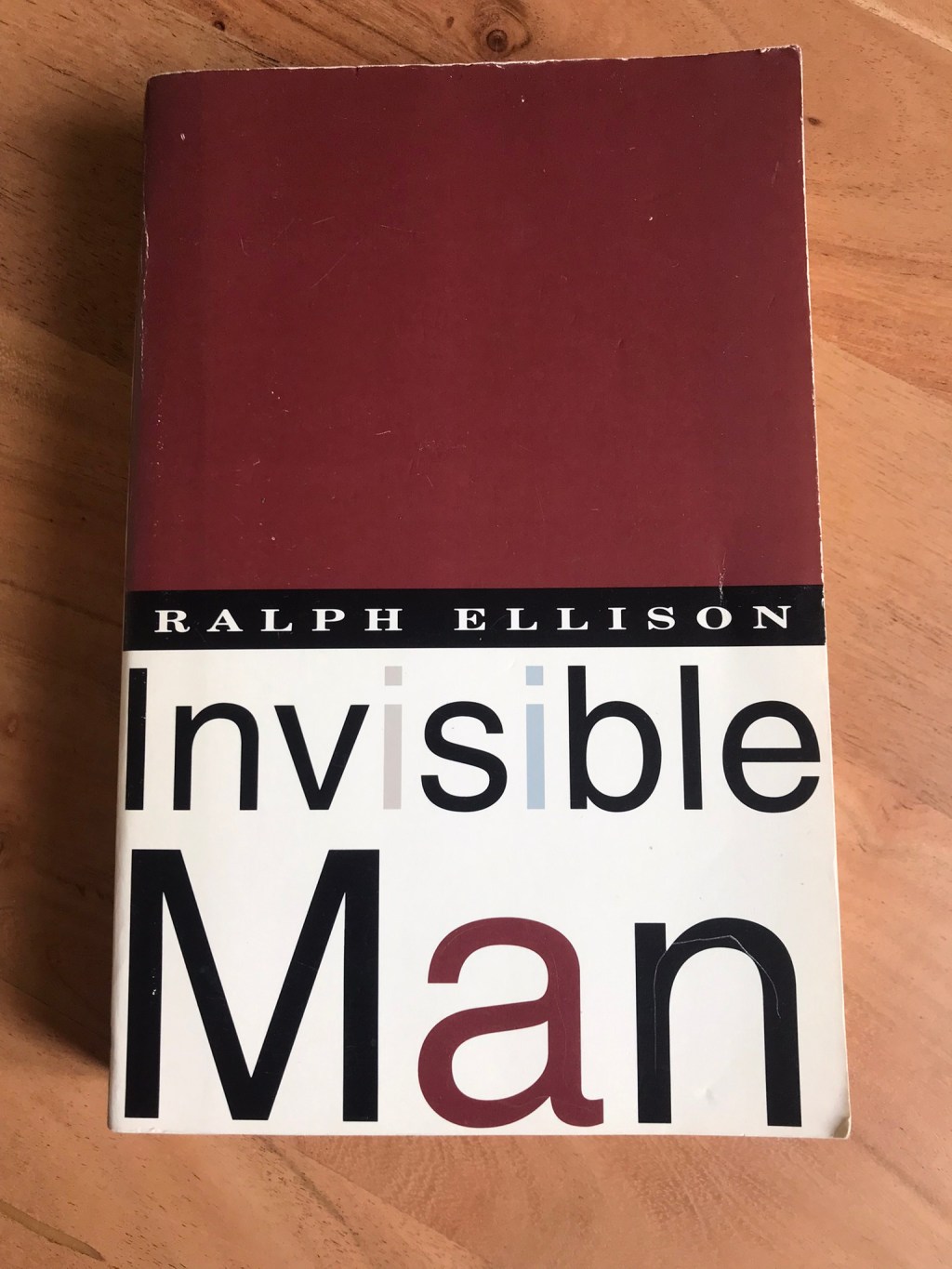
Finished: December 27, 2023
Why I read this
As with 1984, The Prince, How to Win Friends and Influence People, and many others, Invisible Man is a book who’s message remains extremely relevant today despite it being released over 70 years ago. With racial tensions at what feels like an all time high for my lifetime in the United States, I thought it would be a great time to dive into a book about some of our older struggles with race in our country and see how they compare to modern times. It is both surprising, and disheartening, to see just how similar some of the situations have stayed in relationships between the white majority, and minority groups in the US. So despite what I found to be a slow start, I feel the lessons and reflections presented in the book were very revealing and worth the time.
What I learned
For most of my life racism was just about intolerance of another people or culture based on things as inconsequential as skin color, as I’ve grown older I’ve learned that the problem is so much more complicated than that, but one of the greatest lessons from Invisible Man was that racism and bigotry are complex systems rooted in society, and even if we have come far already, there is so much further to go before we arrive at where we should be, and there are challenges related to human psychology and our systems that must be combated before we can progress on these subjects.
Although some scenes reminded me of Confederacy of Dunces where the situations are so ridiculous and improbable that they come across as humorous, there was always that dark undertone of truth that made them a bit more than funny anecdotes. They showed that sometimes an outcast (in this case a black man) simply cannot win, and what might be a real situation for one might be something so bizarre to someone else that it is even comedic. Worse, these situations were expected of people during the time frame. If you did not conform to the societal expectations of your race you had 0 chance of progressing to a position of power enough to do anything to change your position, but if you followed all the rules you only gave more power to those who ultimately were oppressing your minority.
This question of conformity was something that continued to stumble through my head over the month or so it took me to read this. I found this to be exemplified by the quote “what and how much have I lost by trying to do only what was expected of me instead of what I wished to do?”. How much should you conform? When should you conform and under what conditions? For example with racial stereotypes, should people avoid acting under those conditions because doing so might feed into the tensions and misconceptions about their people, or should they do what they enjoy and not care what others think, even if it might not conform with the “proper image” defined by the majority. I can’t imagine the constant identity crisis this must put on minorities in this situation. If you are black and you happen to like loud rap music, when (if ever) should you turn the music down?
This builds even further into the idea presented at the end of the book about affirming the feelings of others, which is something I have found in many of the novels I have read this year. In How to Win Friends and Influence People one of the key ideas is that for other people to like you, you should become interested in their lives, in their interests, and show them gratitude, appreciation, and respect always regardless of your opinions, differing or otherwise. Which is what Ellison writes about with “yessing” people to death, and that you will be loved if you affirm the feelings of others. However, on the other side he says that doing so too much you will strangle yourself by having to always fight what you believe. Moreover he says that “you won’t believe enough in your own correctness to lead others”, and so you can have no impact. What’s the right level? What’s the correct balance here? Should you have the “most worthy virtue” of self-reliance, and fight all your own battles, regardless if you are hated. Or should you work to please others and fit into the machine to cause the least required amount of strife?
A final lesson/discussion I found really interesting was the question of ideology presented by the brotherhood and others throughout the book. The group reminded me greatly of The Party in 1984 where there is a strict philosophy that is brainwashed into its members who believe that they know what is best for society. Because they are “scientific”, they know how people should act and should be, and somehow they know what is best for everyone and anyone. Above all, their ideology is not to be questioned. It is sure-fire and fool-proof, and anyone who has a differing opinion should be completely discredited and abandoned. But how can one group know, 100% what is better for another group? Hell, often parents struggle to even know what is best for their own children. And what I found shocking is that these challenges are so closely mimicked by our current society and they remain extremely relevant. Too often we see politicians discussing how they know what is best for whole groups of people of which they are not a part. “If we want to help refugees, the best thing to do is X”, or “we have to do Y to help the people of Palestine”, or “if you want to stop looting, you’ve got to do Z”. But what is the alternative? Our society is too large to have everyone simply decide everything for themselves, so we have to empower certain people with this ability (hence democracy, woo!), but where the limits of these people’s power should lie is nebulous and vague. Moreover, what is the role of these people in power? Should they use their normally higher education, status, position, etc. to impose their opinion of how things should be on others? There are proponents for and against trickle-down economics, which is exactly this principle for finance, but where is the “trickle-down politics” or the “trickle-down philosophy”?
Finally, the ideology question is compounded by the challenges of human nature and how certain individuals are taking advantage of it. We saw in the book that people are not incited to action through “dry ideology”, they are incited to action through passionate speeches that touch their personal lives, that bring in strong emotions (often through controversy), that show them an image or a story of how life can be, and most dangerously, how others are preventing them from achieving this ideal image of the world. This populist methodology of speaking is inspiring politicians like Donald Trump, and nationalists across the world (western and non-western cultures alike), to drive people against one another to promote their political ascension. And its working! So how do we fix this? It is human nature to act this way and people can pray on it, how can we exit this cycle without installing a counter populist politician who simply says “no its them who are wrong” and creates a different “us vs. them” situation?
What I didn’t like
Although I ended up overall happy with the themes and messages of the book, I felt that the beginning was too slow and had its challenges to grip the reader. I think it is often the case in highly acclaimed fiction such as this that the author includes far too much symbolism, allegory, and veiled social criticism. I enjoy that an author leaves space sometimes for the reader to take their own meaning from the work, but when you have 10, 20, even 30 pages of symbolism such as the opening chapter where you aren’t sure what is real, what anything is supposed to represent, or where it is supposed to go, it is a bit overwhelming. To me the message should be coupled with a context, and when it is not some of the point is lost in the shuffle.
This style of writing also feels a bit over the top. Even as someone who is college educated, with a love of reading, and an appreciation for these things it was hard for me to grasp to points. I imagine the majority of people in this world would not enjoy or appreciate the piece for these reasons, and I believe that percentage would be even smaller in the time where this novel was released. Who was the target audience then? The wealthy educated class would be the only ones who would have understood it at the time, and the critiques may have been lost on this group of (probably) mostly indoctrinated people into the philosophies such as those of the brotherhood already and would disagree with Ellison. Yet after all the book became a classic and has stood the test of time. Who were these readers of the time that championed the book, pushed its messages, and ultimately helped propel us to our current situation where race relations are better (although still enormously to be improved)? How did a book that would so logically be accessible to so few and appeal to even fewer succeed in this time period?
Questions I asked
Should art (writing specifically) be inclusive? If writing is written in such a way that those who are not highly educated can’t understand it, does that exclusion of the undereducated (and therefore underserved), work as a building block for further exclusion?
How can we combat passionate speaking without simply inciting a stronger counter emotion and ultimately creating more tension?
What gives someone the right to impose what they think is better for someone else on them? In which circumstances is it acceptable (since it must be acceptable in some such as law enforcement)?
My Favorite Quote
“He’s only a man. Remember that. He’s only a man!”
Unnamed Inmate
Books I liked like this one
To Kill a Mocking Bird: Harper Lee (For similar critiques of society and race relations during the 20th century)
Why we’re Polarized: Ezra Klein (For modern political challenges that reflect similar tensions)

 Book Reviews for Mom