
Finished: December 29, 2023
Why I read this
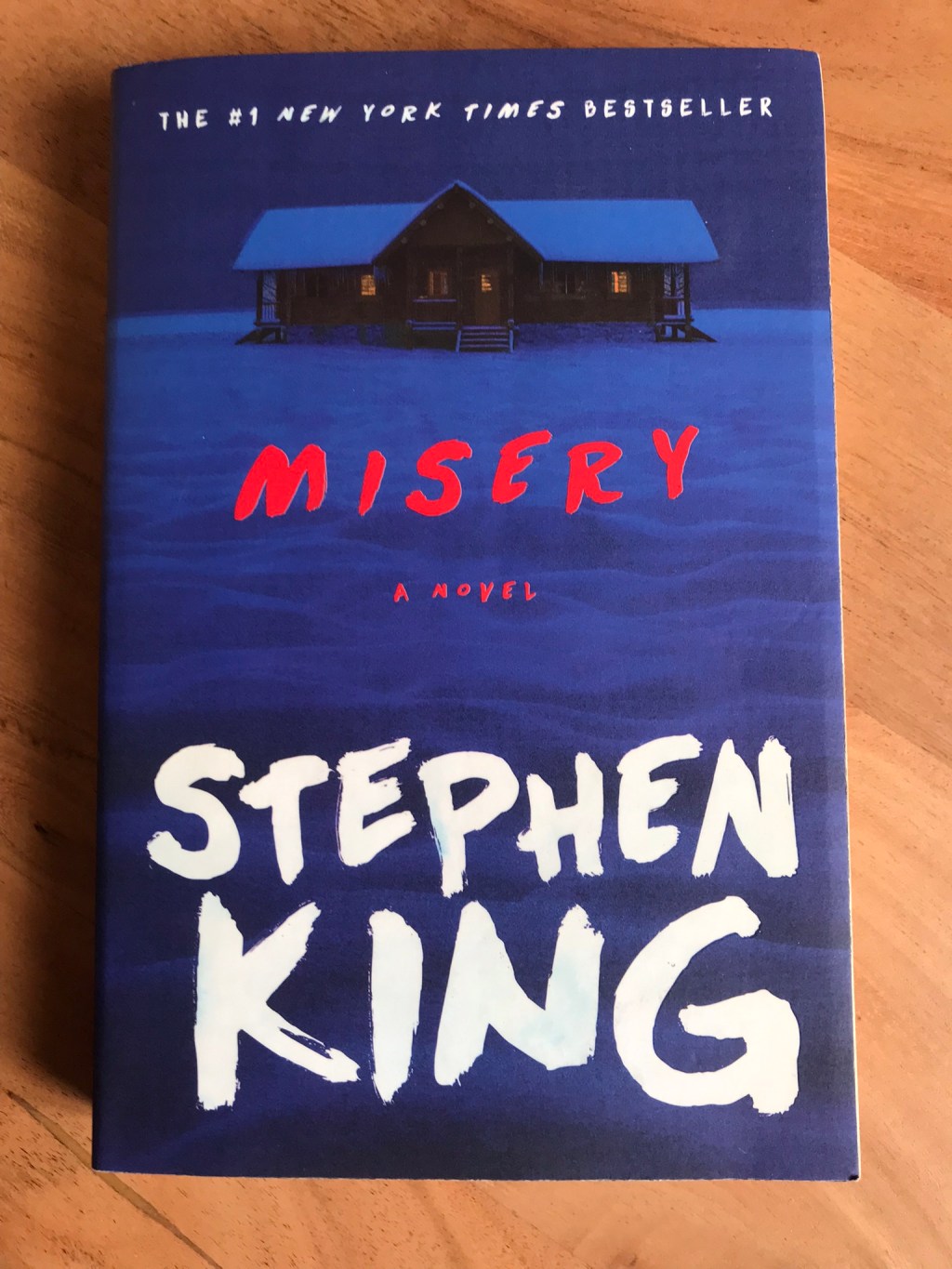
There’s something refreshing about stepping back into something you know well. Whether it is an old favorite film, or a place you used to know very well, or in this case a familiar story written by an author you’ve read so much of, there’s always an added warmth. So despite the gruesome plot of Misery it was a great pick for a relaxing read in the calm period between Christmas and New Years. And following the serious fiction of Invisible Man and To Kill a Mockingbird, the plot driven fiction was perfect. Moreover, I realized recently that some of King’s newer work doesn’t feel quite the same as his older stuff, so going back to one of his classics and remembering the feel of The Stand, or Salem’s Lot made for some great reading.
What I learned
Something I have always found interesting about King’s work is that he really seems to write what he knows, and if he doesn’t know it, he finds people that do (it must be really fun to spend a lot of your time talking with experts about their own specific, and often unusual, fields/practices). So to follow the classic saying, he often writes about writers, of which he should be intimately familiar, and you can tell! The description that he puts in about the creative process for each of these characters is always very interesting, the idea of being fully absorbed and “seeing through the paper” is something you see everywhere that someone describes their passion/talents. However, in describing this process for his characters I wonder how much of his personal process he is explaining. Is it the process of Paul Sheldon? Or is it the process of Stephen King hidden in a “fiction”?
Moreover, it makes me wonder what King thinks of himself a lot of times. Often the writers that he describes are “hack-writers”, or often writers who have written one, or a few, good novels and are searching to re-attain that level. I wonder if he continues to feel that way about his newer writings? Does he have a similar emotion that his older stuff is better and what he writes now is just a “cop-out”? That his newer stuff is people pleasing, but not “serious fiction” as he writes for Paul’s own Misery series?
One point that I found interesting is that he often writes about people who have experienced horrible accidents. Paul here had his car accident in the 1980’s, and his agony, pain, struggles etc. feel super realistic, but King isn’t speaking from experience…yet! It is an interesting kind of cosmic karma for a man who writes often of such horrors to experience his own horrific accident at a later date that I am sure involved many of the same feelings and hardships. I wonder what he would think of Paul Sheldon’s condition in Misery as compared to his own after his car accident at the end of the 90’s.
A final thing that I find fun about King’s writing is his ability to make ties between all his books. With such a vast collection of material to draw from its interesting to have a short comment on the Overlook Hotel from The Shining or to have frequent references in his other books back to the main villains of the Dark Tower series. It gives some more charm to his writing, and makes it feel more familiar. It’s like finding an easter egg in your favorite video game to another classic, and you always feel a slight “yes I got that reference!” when you notice them that simply adds some joy to the process of reading.
What I didn’t like
Although it was better than the movie, I wish I hadn’t seen the movie first to know what was going to happen. I understand it is not much of a critique of the book, but a critique of the situation, but really for this one it was a shame to know how it would end with such an excellent build up for the rest of the story. However, for a bit of an actual critique of the story I found that it was a bit simple. It was absolutely perfect for what I was looking for in this moment, but it doesn’t spark much deeper discussion or review. Great story, active plot, and once it is closed there is not much more reason to revisit. For me it is great as a page turner and a beach read, but it won’t be one that keeps me thinking for weeks, months, years to come, like some of the others I have read this year.
Questions I asked
Why is it that so often writers/artists have much of their best work when they are younger as opposed to older? You would think that with experience they only get better, but often this isn’t the case.
How can you improve the creative act? Are some people just born with it?
Can you write anything worthwhile without having meaningful experiences to draw from?
My Favorite Quote
“It was good to be done – always good to be done. Good to have produced, to have caused a thing to be.”
Paul Sheldon
Books I liked like this one
The Stand: Stephen King (for what I feel is the best of King)
Mindset: Carol S. Dweck (for the questions about what makes someone good at any act, even a creative one)

 Book Reviews for Mom