
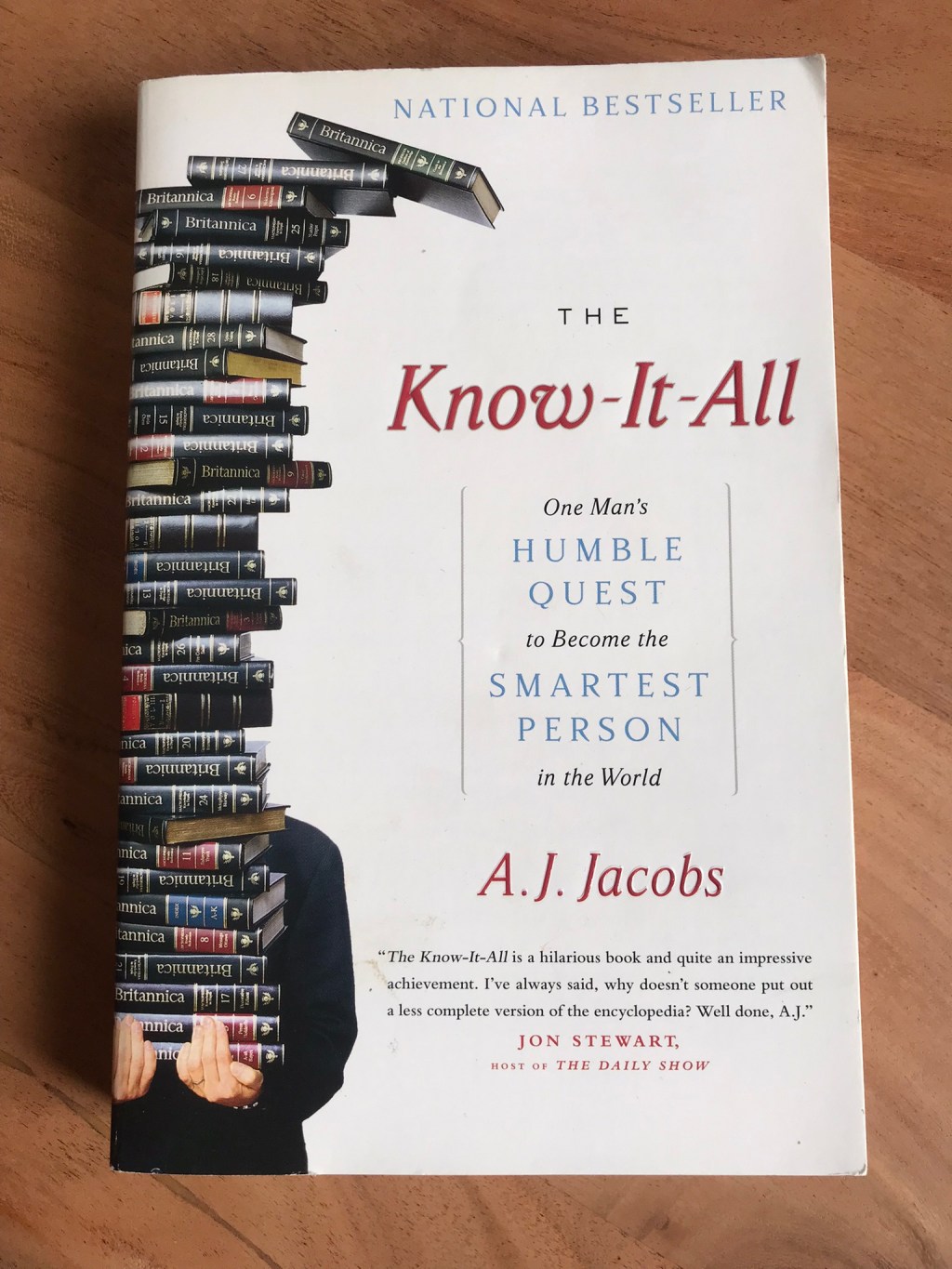
Finished: February 28, 2024
Why I read this
Since I started this project to read more and to blog about it, I’ve gotten mixed reactions from those I have shared it with (either directly or indirectly). The few friends and family I have shared it with have been enormously supportive, but at the same time there have been more than one, well-earned, jabs of me becoming a book snob or a know-it-all. At work I started a miniature library to share my findings with my coworkers, which quickly became a failed experiment that resulted more frequently in comments about me showing off than interest for the books themselves. All in good fun of course, but with a small twinge of truth. So when I see a book where the caption on the cover of the book stating that he was on a quest to become the “smartest person in the world”, struck a chord with me and I pushed it to the top of my reading list. You also would not believe the jokes that I got when I brought this book to the office and my coworkers saw the title. They even took a picture of me next to it!
What I learned
Simply put, I’m not sure that I have found a book in my life that I have so closely related to the author. I could not count the number of times a personal anecdote of his led me to think “wow that’s just what I think”, and my notes reading through the book clearly reflect it because I am not sure I have ever written so many tidbits to save. Like me, he enjoys fun facts, has no interest in sports (stemming from what he believes is his “lack of ability to play them”) he considers himself agnostic, he also grew up thinking he was much smarter than he actually was, and he also has a friendly but serious challenge to compete with the achievements of his father.
To date, I’ve not had too much exposure to memoirs, maybe one or two, so I have to ask myself if we often see ourselves so much in the memoirs of others. I did not in Educated although it was an incredible story, nor did I in various of the biographies I have read over the years, but The Know-It-All often felt more like looking in the mirror than reading a book.
His quest to read the encyclopedia starts much like my re-discovery of reading realizing that “In the years since graduating college, I began a long, slow slide into dumbness.” He was busy consuming pop-culture, while I’ve been busy filling my free time with video games and instagram reels. Like him, I did not “realize quite how out of shape my brain had become.” I remember struggling to stay focused reading on a plane, and I still have the habit of stopping and checking my phone frequently when reading. Learning, like anything else, is a skill which when not practiced atrophies quickly.
His progression and change of attitude during his quest was almost eerily familiar. Starting at the beginning he was finding lots of humor in odd things, he wanted to look smart, he wanted to have something to say that he had accomplished. My blog and my reading began in a similar way. Of course I wanted people to read it and think “wow he is so smart”, or to be able to allude casually to references of the great works of literature and impress those around me. But like he, as I progressed the idea changed. New information starts being interesting for the sake of the information, for example thinking about how burials can be done in a variety of different ways (seated, fetal position, standing, etc.) but we often think only of our culture’s norm of laying flat like you are asleep. It was just like in Ender’s Game when Ender often changes his orientation while in space, because really, it is just our norms that hold us back from seeing other perspectives and possibilities.
It was great to see him continue to address his insecurities as he progressed through his mission, as I hope to do with mine as I progress with my habit of reading and writing (among other things in my life). Seeing the varied perspectives and wisdoms of the history of humankind can help with that. It is hard to feel insecure about the little bit of information you do know when you realize that it is utterly impossible to know it all.
Another thing I enjoyed was the frequent discussion throughout the book on philosophies or ideas I had recently been mulling over in my head with other books or things I’ve done or read. Some examples include the idea of absolute relativism which implies that morals are wholly relative, meaning that nothing can be an absolute moral (recent discussions in my life about whether or not there are universal human rights for example would be at odds with this theory), and to have quotes to contradict them. Such as “there is a gap between ‘is’ and ‘ought.’ The facts are on the one side of the canyon. And there, on the other side, across the river, are your ethical opinions. No logical syllogism can bridge the two.” So even if you create your own moral systems, you can’t escape the facts, maybe facts and science can allow us one day to truly have universal systems and rights in our society, one can hope. Or how in the past there where philosophers like Luigi Pirandello had the same ideas about humanity that I saw in Sapiens by Noah Yuval Harari. Notably, the idea that humanity works in part and because of our ability to deceive ourselves.
Again, and again the book came back to the web of information we have created as a society together. The idea that Jacobs would get “dings” throughout his daily life and how things connect back to the Britannica reminds me so much of the small links and connections I am making with my books. The fact that I feel in normal conversation I can continuously bring up whatever I am currently reading or have just read. Maybe it is just the availability bias described in Thinking Fast and Slow (another ding!). But I had so many of these little flashes throughout the reading that I was astonished. Ideas like the fact that facts are easier to retain when they are on a subject you know well (a sort of rich get richer on intellectual subjects) related back to Why We’re Polarized where people often notice only information that agrees with their viewpoint, I even noticed this recently that I have retained two facts about Aldous Huxley recently (one that he had tried DMT in the 1940’s, and another that he died the same day as CS. Lewis and JFK), because I had recently read Brave New World. Or how the description of his father A.J. Jacobs (the first) was almost a perfect description of the Jewish lawyers found in Gladwell’s Outliers (Jewish, in New York, went to Public school, likely born in the 40’s, ended up as a powerful lawyer). All if it is linked, even modern films like Yes Man with Jim Carrey appear to have their roots in quotes from legends such as Ian Fleming who once said, “Never say no to adventure. Always say yes, otherwise you’ll lead a very dull life.”
As he nears the end of the book it is interesting to see his change of attitude towards intelligence and knowledge. It reminded me of the Dunning-Kruger affect that describes how people’s actual expertise relates to their perceived expertise.
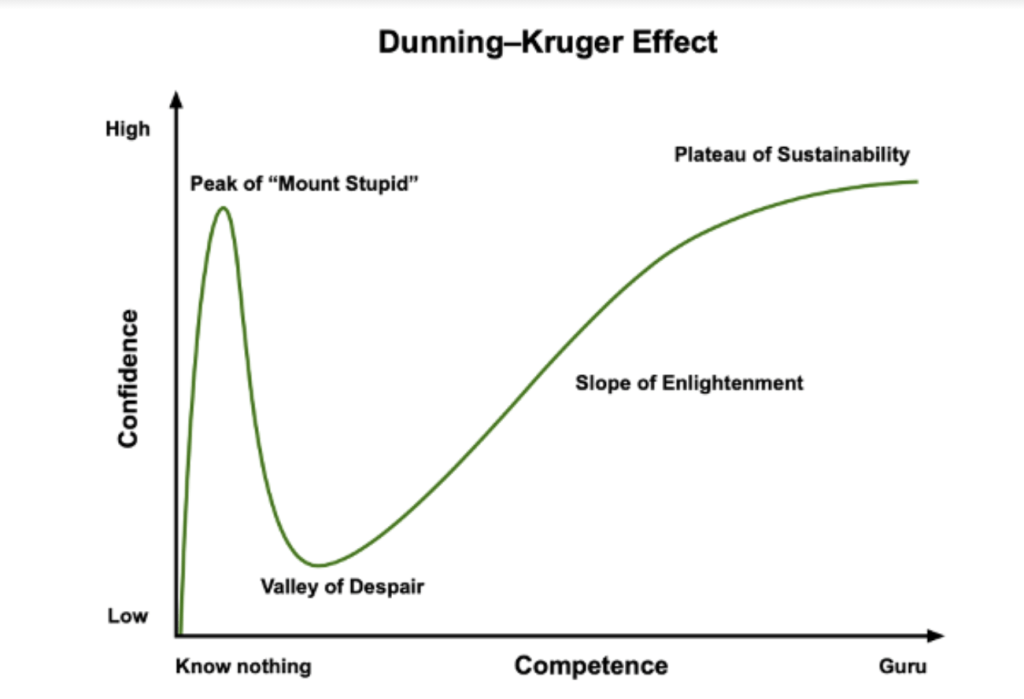
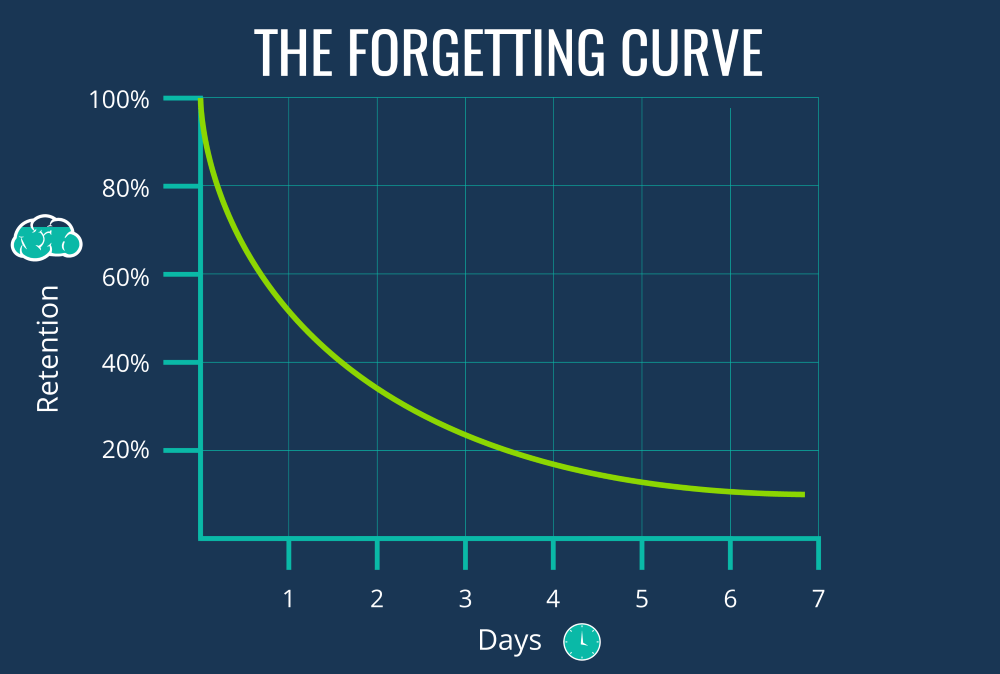
Following the graph our hero A.J. quickly arrives at the “peak of stupidity”, where the perceived expertise is at the maximum. This is a peak I’ve seen many times in myself and in others, if you have that one friend who instantly becomes an expert any time they start a new hobby, this is it. But as he progresses he goes back and forth on how smart he believes that he is, and finished having consolidated his expertise into a more steady increase as we see at the end of our graph. He appears to come to terms with his villainous Ebbinghaus forgetting curve, and begins to agree with more practical wisdoms, such as using “practical problem solving” as a solution to anger (ding, How to Win Friends and Influence People talks about this!).
Ultimately, he closes with an acceptance that builds together many of the impactful quotes and ideas from the year long challenge and some of his key takeaways. I won’t quote the entire section, but I found some of the following points to be his most compelling and relatable.
- Search for the good in things. Even 99% horrible things such as colonialism had silver linings, such as ending certain oppressive and frankly barbaric practices with certain native cultures.
- Everything is fleeting, do not become obsessive or arrogant. As the Persian proverb says “this too shall pass”.
- Whether we live in a clockwork universe or not, scipture such as Ecclesiastes still rings with truth when it states that there is much, if not everything, that you cannot control. This being so, you should do your best to enjoy every moment of it. I’ll try to remember this the next time the wind breaks my umbrella in the rain.
- There are no real right ways to be. For example, I pride myself on doing and not wasting lots of time in the decision process, sometimes for the better, sometimes for the worse. However, those who are patient, and sometimes miss an opportunity because they wait too long can also be correct. Balance is important.
- It isn’t so important what you do to get value from it, but engaging fully with the activity is going to provide you with more benefit. Just like how the speed reading course says that if you read faster you retain more because you force out the distractions, just be present.
At the end of the day, the book gave me some hope that my time is being very well spent on my readings and my writings. That with effort and time they will likely aid me to understand myself and the world I live in just that much better. It also helps me to know that there is a niche for people who are like me. That there are people that are interested in the mundane activities of the life of a normal person, because maybe there is no normal person, maybe being seen, noticed, and provoking the thoughts of others is a worthwhile pursuit. Horace Mann had said that we should “be ashamed to die until you have won some victory for humanity”. I wonder if A.J. Jacobs would feel this way about his work, I hope that he would, even if the book isn’t quite as profound as Occasional Reflections of Several Subjects by Robert Boyle (I found the title very relatable because that is exactly what I do on this blog).
What I didn’t like
This is a hard one. I loved this book. It was thought provoking, intimate, even humorous. If anything comes to mind however, it is about the depictions of his many relatives. First, it seems like everyone in his family is a bona-fide genius (almost every introduction is “wow this guy… reallllyyy smart”, and maybe they are but I feel like certain parts should be toned down. Another observation I made was that he put little focus on the female members of his family. I’m not sure about it, but I think his father probably comes close to the same number of mentions as his wife, and his mother is hardly mentioned at all. Even after the near death experience he had kayaking in Alaska, he only mentions the worry of his father and nothing about his mother. However, it must be very hard for an author to try to focus on what they find to be the key points without being scared to ignore other details, especially when the subject deals with real people. If I ever were to write a memoir I’d hope I’d well represent all of the major influences of my life together.
Questions I asked
What is the evolutionary value of sadness?
If just in 2004 the proper amount of sleep (as quoted in the text) is 8.5 hours a night, when did that change? How many classic rules of my life such as sleeping 8 hours a night, have changed in even the recent past?
Would this mission have worked in 2024? Where we are all addicted to google and can fact check almost anything instantaneously with our portable computers? I think that this book hit the shelves at the perfect golden age of trivia, where a person could acquire many facts that could be slowly confirmed by others through conscious effort (old google or reference books). Now I don’t believe anyone is still impressed with fun facts or strange histories of unsung heroes.
My Favorite Quote
“But we were born of risen apes, not fallen angels, and the apes were armed killers besides. And so what shall we wonder at? Our murders and massacres and missiles, and our irreconcilable regiments? Or our treaties whatever they may be worth; our symphonies however seldom they may be played; our peaceful acres, however frequently they may be converted into battlefields; our dreams, however rarely they may be accomplished. The miracle of man is not how far he has sunk but how magnificently he has risen. We are known among the stars by our poems, not our corpses.”
Robert Ardrey
Books I liked like this one
The Autobiography of Benjamin Franklin: Benjamin Franklin (for a history of someone that provides both knowledge of the time and wisdom for anyone)
The Martian: Andy Weir (For light and fun prose, even on heavy topics)

 Book Reviews for Mom