
Finished: April 12, 2024
Why I read this
I simply cannot leave a story unfinished. I think of all the books I’ve ever started there is only one I can remember truly abandoning (the second book in the Foundryside series, really just infantile), so despite the imposing length, and a somewhat degenerating story I didn’t have much option, but to finish this one. In the end it was worth it, but I’m not sure I’d recommend it for those who don’t want a 4 book commitment.
What I learned
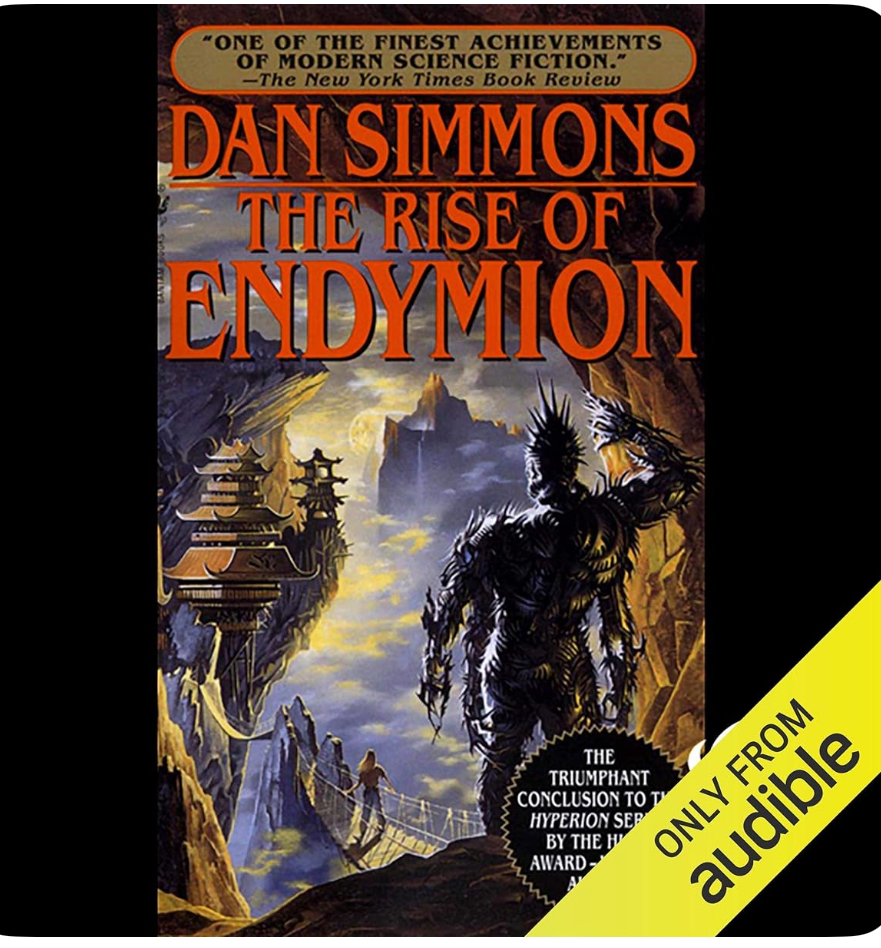
Phew! Finally finished with the 30 hours of audiobook that made this last tome of the Hyperion series and man am I glad to be through! I feel like it has been a century since I started it. Since I started this almost 3 months ago, finished 8 physical books, started a new job, thought about buying an apartment got half way through the process and re-thought about buying an apartment, completed about 95% of the French driver’s licence process (which is incredibly long if you aren’t aware), lost my headphones (which will dramatically slow an audio book listen), and just generally have absolutely packed pretty much every day. So to finally knock this one off the list feels great, and frankly to know that this will complete the saga and I can comfortably close the cover in the Shrike for a while without feeling like there is another part of the story waiting for me to get to it.
That is the challenge with the epics of science fiction that span multiple novels. If you want to have the full story inevitably you’re going to have to slog through countless pages of meh writing before you can find the really moving and impactful parts. It’s a bit how I feel about a lot of modern media such as Marvel or Star Wars. On the one side they could end it as it is and allow the piece to be complete with all of its flaws, untold stories, and eventually it will fade into obscurity. Or, they can do what they do more often than not these days, and continue to produce hour after hour of content that is for the most part simply riding the coattails of the original characters and feels at best uninspired, and at worst simply cheesy. But Dan Simmons with Hyperion choose to do it the first way and I think the story is better for it. More to show that too much of a good thing can be a bad one. So regardless of what I felt was a relatively lack-luster end to an engaging series it still had some points worth thinking about.
One of the best examples of these points was a description about how humanity in this fictional universe had hunted almost every large or intelligent beast they found to extinction. Of course this is the classic argument that humans are like a virus and we take all the space for ourselves and ruin countless ecosystems with our hubris. But on the other side it made me think about the findings from Sapiens, where Harari asserts that just a few hundred or thousands of years after being introduced to humans, almost all megafauna on the planet has gone extinct. This being true for every culture, every continent, every group, and every species. We all know about this for Mammoths, but what about for all the mega species of Australia? Apparently the land down under was a utopia of larger than life creatures until we arrived some tens of thousands of years ago. So it’s interesting to think whether we would do the same thing if we were to arrive on other planets today, or in a few hundred years. Would we be the benevolent galactic police like in Star Trek, or would we hunt any competition for the most intelligent life form until extinction. I think it’s a question science fiction will continue to guess at for the next few hundred years, I’m just a bit disappointed I won’t get the chance to find out the answer.
Secondly I loved the futuristic idea of the space tree. The idea of a Dyson sphere of living things using the entire power of a star would be incredible. The pure size of it would be simply inconceivable, but Simmons did a nice job making it so in this book. When it fell under attack I was more scared for the tree than our characters. But I wish we could have known more about the tree and its working. They describe a ecosystem with billions of life forms, but they really only pass by the tree. It’s funny because I remember being younger and reading and thinking “who gives a shit about the daily business, just push the plot”, but now I think Simmons missed an opportunity where he could have built the world up a bit more in describing how a utopia of that scale could possibly function. What do people do with their time? Do they have normal jobs? Are there schools, policeman, bakeries? All the normal things we normally experience every day would make it easier to connect, just like he had built the world-web in Hyperion and Fall of Hyperion.
The last idea I wanted to dig into was something that Father Duré had said near the end of the book when discussing immortality. He said that “No lifetime is long enough for those who wish to create.” which I found extremely relatable. I’ve always felt driven to create something, to build something. At the same time we see constantly those who create businesses or political empires hold onto to these things far after they should let the next generation come in and do things. I’ve always wondered about people like Biden who spend the last years of their lives slaving away for the country in the hardest job in the planet, and maybe this explains it a little bit. Maybe people like Biden want to build things, want to create, and there will never be enough time to do so. Claude Monet and Picasso painted until their very last days. J.R.R. Tolkien and Frank Herbert left mountains of manuscripts that they couldn’t quite finish despite a lifetime to do it, and George R.R. Martin looks like he might do the same. I’d also bet Stephen King has a few thousand pages lying around that “one day I’ll get to that”, but I bet “one day” might be a bit too late.
What I didn’t like
The biggest criticism for me comes from the last third of this last book. At this point the stakes are monumental and all the mysteries begin to unravel. Protagonist and antagonist face off, the real people pulling all the levers are revealed. Things progress rapidly, and how do they progress? Like a 90’s anime, or an early 2000’s Dr. Who episode. The power of love and friendship saves the universe. Literally they make love into an energy source that is able to transport matter instantaneously across the universe. Really? After 120 hours of listening to intense, adult, philosophical science fiction it’s going to end with the power of friendship, of empathy just magically fixing all the problems in the universe? It felt like Simmons had written himself into a hole and technology could not get his characters to where they needed to be, so he used magic. It’s fine for a Dr. Who writer, but for one of the great science fiction writers? Come on!
But speaking of love, maybe I just haven’t fully grown up yet, or maybe it was poorly written, but the love scenes felt painfully awkward and uncomfortable. I didn’t need the details about zero gravity lovemaking for 15 minutes. It made it even worse when I’d be doing something like jogging in the park and what I’ve got playing on the audio book feels more like smut than serious reading.
Questions I asked
Would people maintain monogamy if we were immortal? Would relationships be stronger, or worse if they extended to 100, 200, 1000 years?
What is the correct balance between preserving tradition and encouraging diversity?
Is marriage still a religious construct, or is it just the origin of it?
My Favorite Quote
“Almost everything interesting in the human experience is the result of an individual experiencing, experimenting, explaining, and sharing.”
Aenea
Books I liked like this one
Do Androids Dream of Electric Sheep : Phillip K. Dick (for plot driven sci-fi that sticks with just a small amount of total content)
Project Hail Mary : Andy Weir (for a different perspective of what life might be like)

 Book Reviews for Mom