
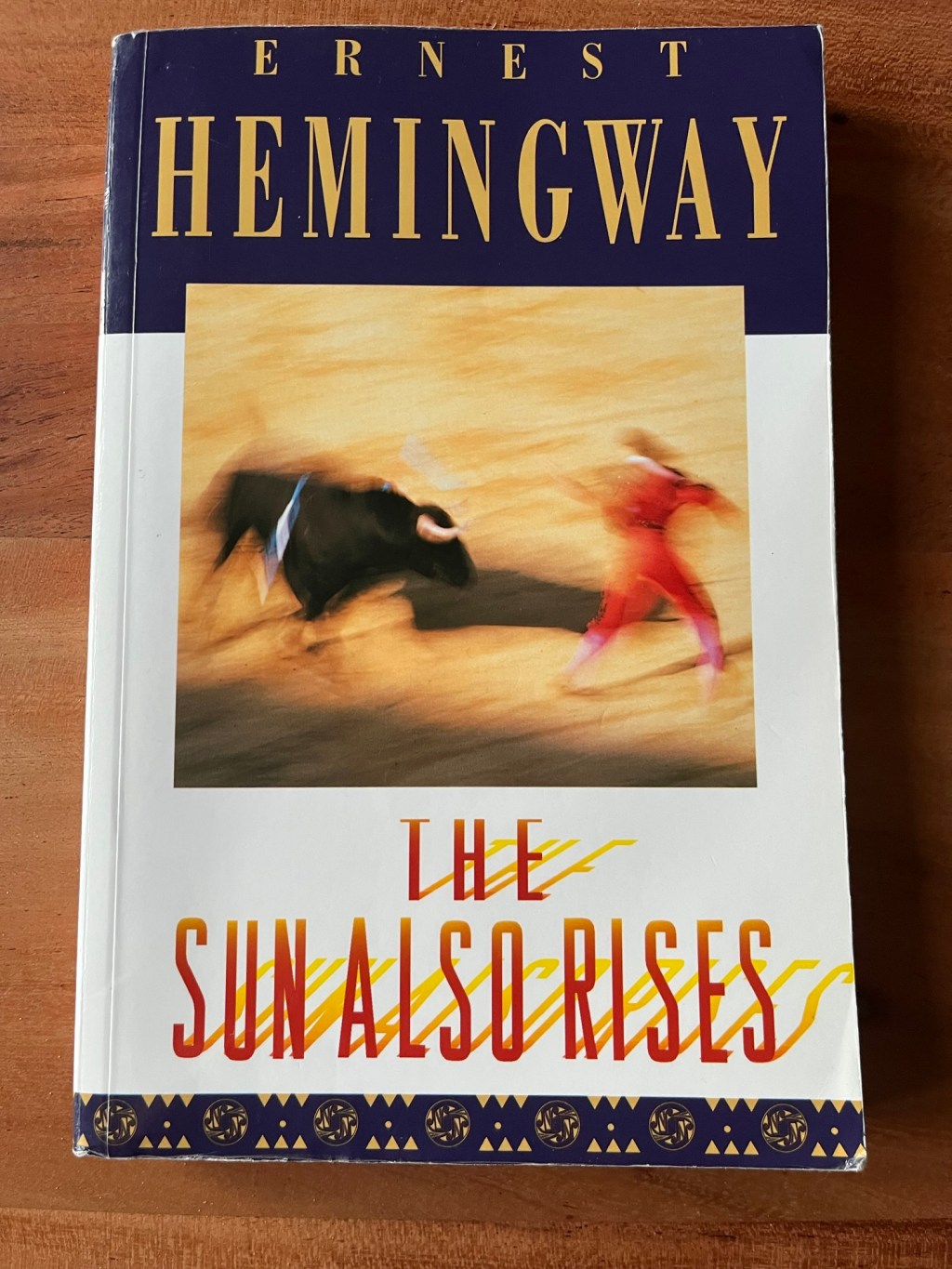
Finished: April 12, 2025
Why I read this
It’s been a while since I read The Old Man and the Sea and frankly I wasn’t that impressed by what is commonly touted as a crowning achievement of American literature. The story was ok, and I wasn’t sad to have read it, but for a first experience with the mythical works of Ernest Hemingway I expected something more. When you dive into these authors that are so universally acclaimed you expect a life changing book, or at a minimum something that sticks you. A book where every time someone asks for a book recommendation it comes to your head immediately. That’s the type of feeling I’ve had with To Kill of Mocking Bird or The Alchemist or even Dune. This is the level I had expected of Hemingway, yet The Old Man and the Sea fell short of that tier of timeless classics. A year later I decided it was time to give “the greatest American author” another go and where better than to start with a story about Paris and expatriates.
What I learned
As expected, a history of Americans partying in Paris and Spain managed to hit a special chord with me. The first part of the book as the streets of Paris were described in detail and familiar locations were mentioned made for an exceptionally easy connection to the characters and places. The way the characters sometimes mixed and sometimes clashed with the local culture (for example having varying levels of ability to speak the local language) is still the case with expat communities today and reminded me deeply of my own experiences. Even the way the group would discuss issues and modern events over beers or absinthe at the local bars was like looking into a mirror of my relationships with several people here, especially those I made at the beginning of my stay. Relationships which were not built like normal relationships on trust, shared interests or values, but instead purely on circumstances. People who find themselves pushed together by the fact that they each find themselves in an open and strange world and they prefer to spend time with anything than to be alone. I’ve left a lot of these relationships behind and have found people with which I resonate on a deeper level to pass my time with, but this book was still an interesting revisit of that part of my life.
So it was this mix of characters who despite having very little in common, created connections and interdependencies to eventually forming groups which were so similar to the parties you might find today in expatriate communities. People still stay out late and drink too much and dance at cafés, even on week nights. Groups like Brett, Bill, Robert and Jake who would spend time with people they don’t know, understand, or even like, simply because they were there. In a way it broadens your horizons enormously, exposing you to people you would never meet otherwise at a level deeper than you would have expected. However it wasn’t this spinning expat group, that stood out the most to me. It was instead a relatively minor character, the Count Mippipopolous (a large and wealthy Greek man who is added to the group of expats in the usual way, an attraction towards the female members of the group). He wasn’t being creepy as you might expect an older wealthy man chasing younger women, he was very calm and level headed. He didn’t care about the end of the chase, instead experiencing each moment to the fullest. Offended by nothing, and generous beyond belief the Count employed a pure Bob Marley philosophy of “Don’t Worry, be Happy.” Something each of us need to embrace a bit more. He advised the younger expats to simply enjoy life to the fullest and not to worry about the problems that will come, because there will surely be a few. Even in pursuit of Brett he was complementary and open with potential suitors. It was an interesting juxtaposition with the anxious and confused group, who in trying so hard to get what they want only appeared to push themselves further into disappointment. Of all the characters we meet in the book I think the only one who was happy was the Count.
Moreover, throughout this read, I could not help making the comparison between my generation and that of Hemingway’s fictional, but oh so realistic group. The fact that this generation was given the name of “the lost generation” was not lost on Hemingway. The community he created was filled with disillusioned and unmotivated youth of which not a single one appears to understand what they want throughout the entire book. This lead me to a seemingly unending list of parallels between my generation and theirs. Like them we are living in a period of unparalleled economic boom (the roaring 20’s compared to the 2010’s and even now into the 2020’s) yet there are still painful memories of worse times that we don’t quite understand (for our characters World War 1, for our modern youth the 2008 financial crisis). Like them our generation struggles to balance the wealth around us (the stock market would make us believe everything is coming up roses everywhere) with the apparent state of the world (which appears to be collapsing right and left between wars, environmental catastrophe, social injustice, and political regression). We struggle to find the path forward to address these challenges when on paper the world is in a good (or relatively better) place with the best scores on sexism, violence, equality, etc. ever recorded globally. The numbers fail to alleviate this feeling that everything is secretly going wrong. Rotting from the inside, and nothing will be seen until it is too late. These individual expats reminded me of the many people around me who appear lost. People I have known who have dreams and visions for the things they wish to accomplish in this world, but descend into rather hypocritical and unproductive self-serving behaviors in the addictive draw of simplicity and comfort which exists all around us. I’ve known people to criticize the purchase of luxury watches while working in environmental activism, just to quit their job and use their income as a landlord to travel the world on a sailboat. I’ve known people to leave their jobs in the energy industry (one of the few places where someone can really make a difference towards the energy transition) to become a mountain tour guide or a chef because they felt there was no hope in the transition anyways. I’ve known people who preach for change (social, economic, political, etc.) yet they return home in the evening to their consumerist Amazon packages at the door, order their homophobic Chic-Fil-A to be delivered by a underpaid minority driver, and sit down to watch romantic comedies made in Hollywood by the likes of Harvey Weinstein, yet satisfied with their end of evening comments on a middle rate youtuber explaining the geopolitics of the Israel Palestine conflict. We’ve become a generation lost in information and conflicting values. It is simply impossible to fight all of the battles that need to be fought right now, so much like how our protagonists escape the strange world of the 1920’s with excessive partying instead of concentrating on the real challenges of their time, our generation is trapped in a negative feedback loop of decision paralysis and anxiety over the future and replaces commitment and progress with scrolling and comfort foods.
So if this was how people (at least the upper class people presented) lived in this period of excess right before some of the hardest times of modern history (The Great Depression and World War II) what does that say for my generation? Where are we going and is great misfortune right around the corner?
What I didn’t like
The one thing I didn’t like was that several of the characters were unredeemably obnoxious, or even just terrible people. The character of Brett reminded me fully of Daisy in The Great Gatsby where she simply lets life pass around her, doing what pleases her in the moment, and not taking responsibility of the consequences. Brett wants to go off for a weekend with Robert? She does it without concern for his feelings and abandons him as soon as he is no longer her desire of the moment without giving he the simple honest truth to allow him to move on. For the men Mike and his cruelty towards other members of the group full of racist comments and rage. Just a few moments where these characters could have been made more likeable would have made their flaws feel more human and reduced the disdain the reader feels for them.
Questions I asked
How are we (Gen Z) like the Lost Generation? How are we different?
Why do people continue to spend time around people that make them miserable?
Why do we appreciate things more when they are familiar to us?
My Favorite Quote
“Yes… isn’t it pretty to think so”
Jake Barnes
Books I liked like this one
Monsignor Quixote : Graham Greene (for a light and disjointed story full of deep reflections in shallow situations)
The Great Gatsby : F. Scott Fitzgerald (for a story of rich people who break things in the 1920’s)

 Book Reviews for Mom