
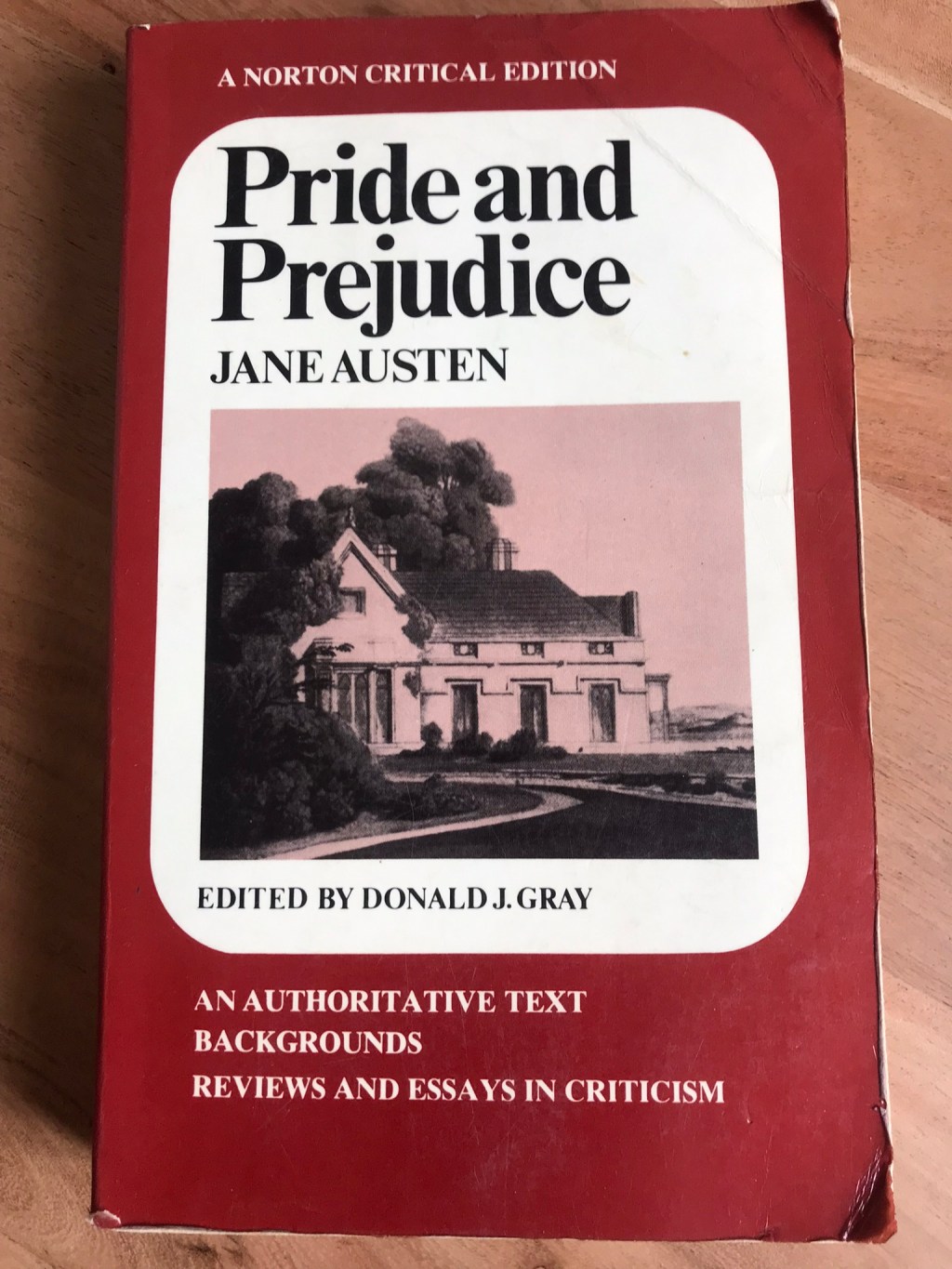
Finished: October 19, 2023
Why I read this
I’m not sure how I managed it, but I think before opening this book the only thing I knew about it was that there was some character named Mr. Darcy, and he is supposedly pretty romantic. Moreso, the genre of book here was not one I have often picked up. Writing of this period, has not always interested me, and especially not writing in this period of the lives of “ordinary people”. Because, although they are rich people, they are not kings or lords, and the events are not those of international significance such as war, adventure, or diplomacy. Yet, I frequently found this book as a recommendation for one of the best books of all time, plus a recent recommendation from a family member who said it was “the English language perfected”, pushed me to dust off the secondhand copy that was clearly used for a previous high-school course, and check it off my list.
What I learned
From the very beginning of reading this I felt that it represented quite the cliché of Victorian era writing. All the ladies are constantly falling head over hells for the men and the gossip is absolutely non-stop. The characters all follow formal and rigid rules of etiquette and politics, and when these rules are breached, they respond with such drama that it almost feels like a soap opera. But the best part of about it is that after all, it isn’t cliché. It was one of the first of its kind and done perfectly. That’s why it’s a cliché, because thousands of authors have created similar plots and built off her ideas and themes that we see them everywhere these days. If that isn’t flattery for an author, I don’t know what is.
I like to believe that normally I would not be horribly interested by 300 pages of aristocratic gossip, but the interesting thing was that I found myself extremely captivated during the read. I remember noting that I was impatient for the tensions to resolve between some of the characters and I would press myself to read faster to get to it. I think the easiest explanation for this is that her characters felt very real, very human, and I believe the subjects touched a lot on human nature.
I think one of the marks of a great writer is that the characters feel real. That is probably the hardest part of writing, and the way the characters and situations feel in Pride and Prejudice were so relatable and realistic I felt that it could have been a true story at certain points. The way the characters would stretch the truth, and spread pieces of information around their families and groups felt just like it would go today, or even how the men would sometimes act around the girls being shy one moment, then extremely outgoing the next depending on the circumstance felt natural (this also made me think of the idea of coupling my Malcolm Gladwell in Talking with Strangers where he discussed that certain actions and mannerisms were coupled to places, so obviously Darcy is going to act differently around his home than he would in the Bennet’s household).
Moreover, I saw many of the values and sociology/psychology I’ve read recently reflected in the thoughts and actions of the characters. Some examples include the English custom that the person of greater consequence should begin an introduction, and not the other way around that is still present in the business world, where we expect our bosses multiple levels up to take notice of us, and not the other way around. Another example includes Elizabeth’s comment that everything nourishes what is strong already, which relates strongly to the ideas presented in Why we’re Polarized where people more only search for facts that support their existing views. Or my favorite from How to Win Friends and Influence People where they say the best way to get anyone to like you is to become genuinely interested in them, regardless of if there is anything to gain, a lesson that Mr. Darcy learns and expresses on his own. So many things showed up in this book that accomplished journalists, psychologist, or sociologists of the modern era have written out, that Jane Austen was able to simply observe.
What I didn’t like
It may be a shortcoming of my own more than the book, but the comment that this is the “English language perfected”, I believe might be a stretch for today. I found the writing method to be complex and difficult to follow with too many changing names for characters (for example Elizabeth could have been “Elizabeth”, “Lizzy”, “Miss Bennet” if here sister was not present, or “the second Miss Bennet” if her sister was present). Moreover, in times of discussion where there were numerous characters involved it could be very challenging to retrace who was speaking when and to whom. It is a relatively minor complaint, but I found myself frequently re-reading passaged to be sure I understood.
Questions I asked
What does it mean to be English perfected? Are we idolizing an old timey English? Is our current language any less proper, or is it simply different, and as with everything we are constantly resistant to change?
When is Pride a problem? It is a both a cardinal sin, and something we say to our loved ones in their finest moments. Who has the right to be proud, and when?
Should we always be 100% honest with those we care about, or should we strive to protect them even if it means making assumptions of their feelings and best wishes, and following it with concealing of information, or lying?
My Favorite Quote
“Vanity and pride are different things, though the words are often used synonymously. A person may be proud without being vain. Pride relates more to our opinion of ourselves, vanity to what we would have others think of us.”
Mary Bennet
Books I liked like this one
Tale of Two Cities: Charles Dickens (for writing of a similar period)
The Count of Monte Cristo: Alexandre Dumas (for a captivating story and high writing)


